The omni-present but elusive mongoose
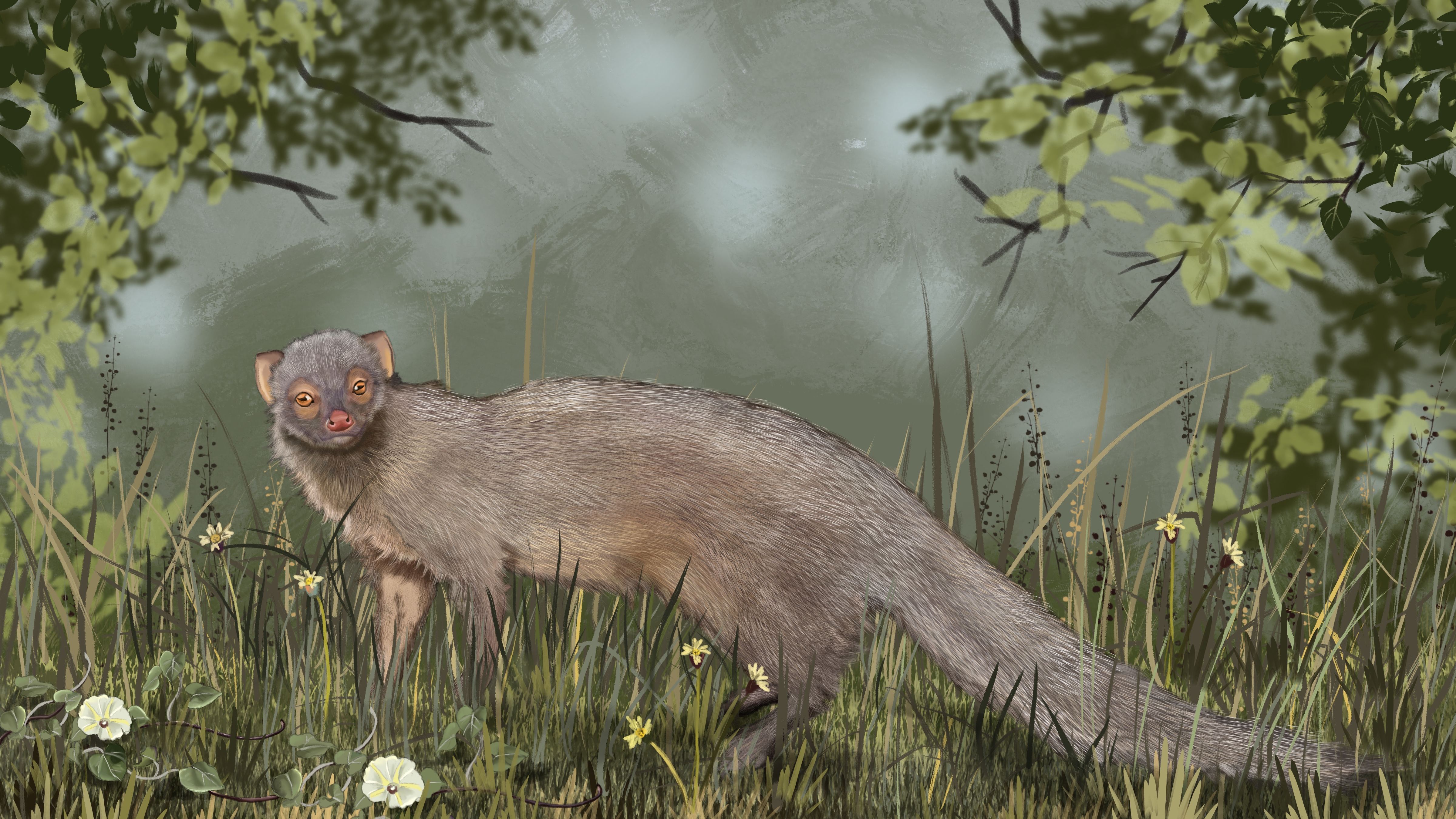
India is home to six species of mongoose. The Indian grey mongoose (Urva edwardsii) is one of the most widespread Indian mongoose species amongst all of them. It is found across the continent and in some parts of the Middle East.
Apart from their services used in controlling pests, traditionally mongooses were valued for their tail hair used in making painting brushes and were poached across their home range. Now this demand has gone down due to the availability of synthetic hair which are used to make painting brushes.
This painting of the mongoose seen on the IMSc campus was illustrated digitally. When I was asked to make this painting, I was a bit skeptical as I wasn’t sure how to capture the hair colour of this animal. The mongoose like many other animals like the black-naped hare and the Indian palm squirrel have hair, in which a single strand of hair has three colours in bands, namely, grey, white and ending in a black tip. This pattern is known as agouti and is a type of fur colouration described in wild animals giving them their characteristic grey-brown appearance. The challenge while making this painting was to authentically capture this pattern. I wanted to show the mongoose in its natural habitat and hence I have tried to show it a grassy meadow, hiding away in the undergrowth with it’s stealthy movements. I have additionally tried to capture tridex (Tridax procumbens) and obscure morning glory (Ipomoea obscura) commonly seen in the undergrowth to add a pop of colour to the illustration. On IMSc campus the mongoose is usually seen near the tennis court.