<link rel="stylesheet" href="assets/css/noscript.css" />

Program

4:00 PM - 4:45 PM D. Shankar, CSIR-National Institute of Oceanography, Goa
Evolution of our understanding of the dynamics of the North Indian Ocean
4:45 PM - 5:30 PM S. Ramakrishnan, Indian Institute of Science, Bangalore
Plastics – the good, the bad and the ugly
5:30 PM - 6:00 PM Refreshment Break
6:00 PM - 6:45 PM Saket Saurabh, Institute of Mathematical Sciences, Chennai
The Art and Math of Puzzle Solving
6:45 PM - 7:30 PM Annapurni Subramaniam, Indian Institute of Astrophysics, Bangalore
Astronomy from Ground and space
READ MORE

Speakers

D. Shankar

CSIR-National Institute of Oceanography, Goa

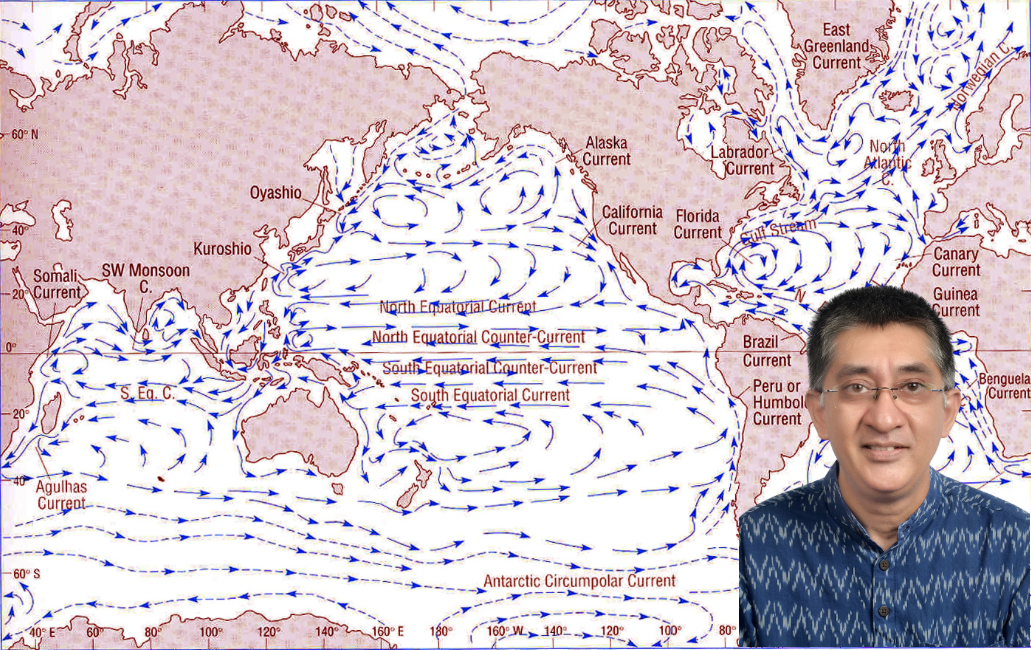
Evolution of our understanding of the dynamics of the North Indian Ocean

What do we know about the circulation of the seas around India? In the past few decades observations and models have deepened our understanding of these dynamics and provide direction for future work.

Our understanding of the circulation of the North Indian Ocean, or the seas around India, and its underlying dynamics have evolved over the last few decades. This talk provides an overview of this evolution and takes a peek into the future. We will discuss the circulation of the ocean forced by the winds and the theoretical framework that underpins the dynamics. Studies of the North Indian Ocean and its circulation have largely been described using linear theory providing broad insights. Nonlinear effects cannot, however, be ignored and are important for accurate predictions.

D. Shankar is a Chief Scientist at CSIR-National Institute of Oceanography, Goa. His main research interest is in tropical ocean dynamics. He is involved in projects that currently provide basic data on ocean currents required for theoretical analysis of the circulation and dynamics of the seas. He has made significant contributions to the physical oceanography of the North Indian Ocean, addressing problems in ocean dynamics using simple models to provide elegant, yet quantitative, explanations for the observed circulation.
S. Ramakrishnan

Indian Institute of Science, Bangalore

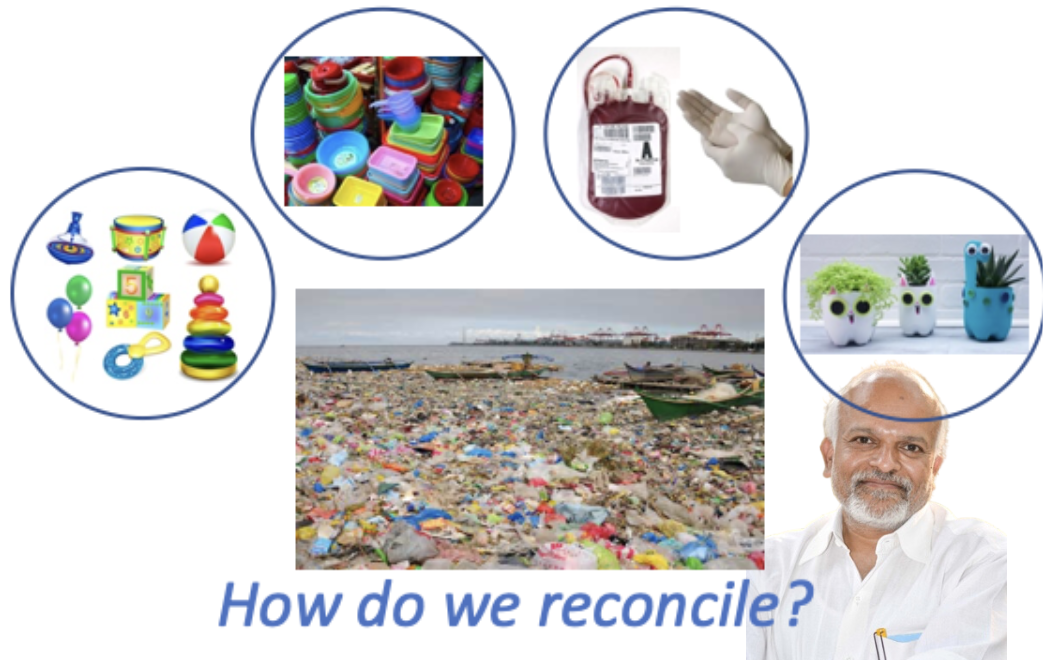
Plastics – the good, the bad and the ugly

Plastics belong to a class of molecular materials that are here to stay, but the choice we need to make is – where and how to use them.

We celebrated the dawn of the Plastics Age a little over 50 years ago, but the potential hazards of improper use, handling, and disposal of polymeric materials has become increasingly clear to us in the 21st century. While it is obvious that we cannot simply wish away the use of plastics entirely, it is time to reexamine the issue, and wisely devise strategies that will help mitigate the disastrous environmental damage that plastics are causingThe talk will present the context for the existing problems associated with plastics, their usage, and examine the possible solutions to the crisis that is looming at-large. This polymer scientist suggests an update to the frequently used adage: Reduce-Reuse-Recycle-Reinvent.

S Ramakrishnan completed his schooling in Chennai, got his BSc from the University of Bombay and MSc from IIT, Bombay. After obtaining his PhD from the University of Massachusetts, Amherst, USA, and a short postdoctoral stint at the Exxon Corporate Research Laboratory in New Jersey, he returned in 1990 to take up a faculty position in the Department of Inorganic and Physical Chemistry, Indian Institute of Science, Bangalore. His research focuses on developing new strategies to control the properties of polymers, in solution and in the bulk, by tinkering with their structure at a molecular level.

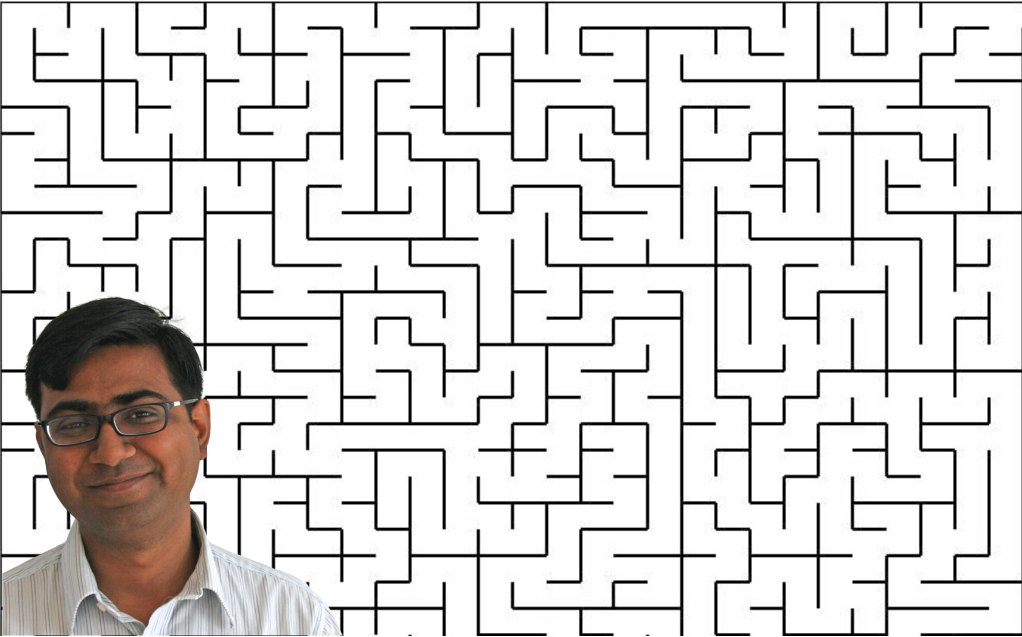
Saket Saurabh

Institute of Mathematical Sciences, Chennai

The Art and Math of Puzzle Solving

We will examine some popular strategies of solving puzzles such as Sudoku. These solutions can provide a basis for a mathematical framework to study heuristics.

In this presentation, we will explore several commonly used techniques, also known as heuristics, for solving puzzles like Sudoku. These strategies involve reducing the given data to solve the puzzles. Data reduction techniques are extensively used in real-world applications to tackle computationally challenging problems. The formal expression of the efficiency and accuracy of these pre-processing procedures has been a longstanding challenge. In this talk, we will establish connections between these techniques and a specific subfield of computer science that lends itself well to a mathematical analysis of pre-processing heuristics.

Saket Saurabh received his PhD in Computer Science (2008), from The Institute of Mathematical Sciences (IMSc), Chennai. Saurabh spent two years (2007-2009) as a Postdoctoral Fellow at University of Bergen, Norway, and is now a professor at IMSc and at Department of Informatics at the University of Bergen. He is a co-author of two books: Parameterized Algorithms and Kernelization theory of parameterized preprocessing. He received the Shanti Swarup Bhatnagar Prize (SSB) for Science and Technology in 2021. His main research interests are in graph algorithms, parameterized algorithms and complexity.

Annapurni Subramaniam

Indian Institute of Astrophysics, Bangalore

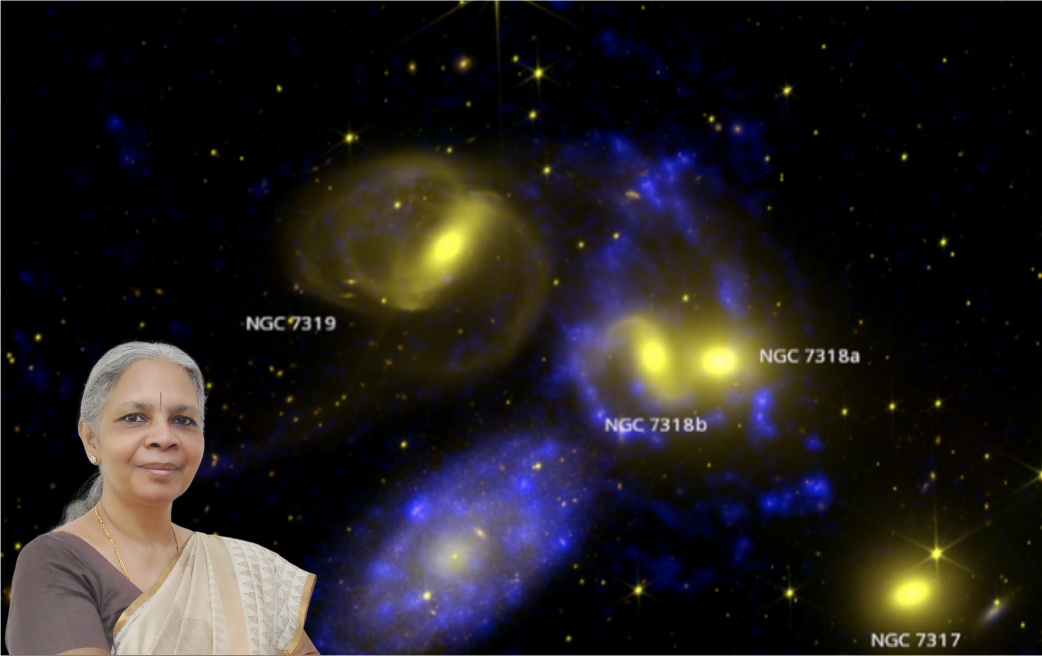
Astronomy from Ground and space

National and international astronomy projects have been using equipment on the earth as well as in space. India's first space observatory, AstroSat collects a wide-range of scientific data that provides insights into our universe.

Astronomical studies in pursuit of understanding our universe are being carried out using the ground as well as space based experiments. There have been various international space missions that contributed to the multi-wavelength studies of various astrophysical phenomena in the past. India's first space observatory, AstroSat has got significant attention in the international scene with its wide-ranging scientific output. As the calibration scientist of the Ultraviolet Imaging Telescope on AstroSat, the speaker will talk about the considerable knowledge regarding space missions. Here, I present some highlights of my journey in astronomy and some thoughts for the future.

Annapurni Subramaniam the Director of the Indian Institute of Astrophysics, Bengaluru. She is trained as an optical astronomer and has more than three decades of research experience in the study of star clusters, stellar populations, galaxies, and ultra-violet astronomy. She is the calibration scientist for the UV Imaging Telescope (UVIT) on board India’s first space observatory, ASTROSAT. She headed the Indian team of the Observatory software, completed the delivery of Common software in 2019 for the Thirty Meter Telescope (TMT), which is being built by an international consortium with India as a partner. She is the Principal Investigator of the proposed next generation UV-Optical space telescope (INSIST), leveraging on the experience gained from AstroSat and UVIT. Her current research interests include Star clusters, Classical Be stars, Young stellar Objects, Blue straggler stars, Magellanic Clouds, nearby galaxies, UV astronomy.

Instructions to the participants

Entry to the exibition in the foyer opens at 3:00 pm. Auditorium doors open at 3:30 pm. Please be seated by 3:45 pm. After that time, we will start letting in walk-in participants.

Parking (3--8 pm) is available inside the library campus.

Have a question for any of the speakers?

Post them

On Facebook: www.facebook.com/scisabha
Or tweet:
Or SMS: TBA

Selected questions will be answered by the speakers on stage!