Science at the Sabha 2023
Talks on science for the general public
#The Institute of Mathematical Sciences (IMSc) is a national institute for fundamental research in the mathematical and physical sciences. This program of four talks aimed at the general public is part of the Triveni Outreach Series of IMSc.
No specialized knowledge of science is required to appreciate the talks. The program is free and open to all but registration (on this web page) is required.
Program
#| Time | Event |
|---|---|
| 4:00 PM - 4:45 PM | Parameswaran Ajith, International Centre for Theoretical Sciences, Bengaluru Black holes through different windows |
| 4:45 PM - 5:30 PM | Mitali Mukerji, Indian Institute of Technology Jodhpur Ayurveda and modern medicine: the beginning of a molecular conversation |
| 5:30 PM - 6:00 PM | Refreshment Break |
| 6:00 PM - 6:45 PM | Siddhartha Gadgil, Indian Institute of Science, Bangalore The Quest for Automating Mathematics |
| 6:45 PM - 7:30 PM | Hema A Murthy, Indian Institute of Technology Madras Carnatic Music Processing: A Culture Specific Approach |
Talks
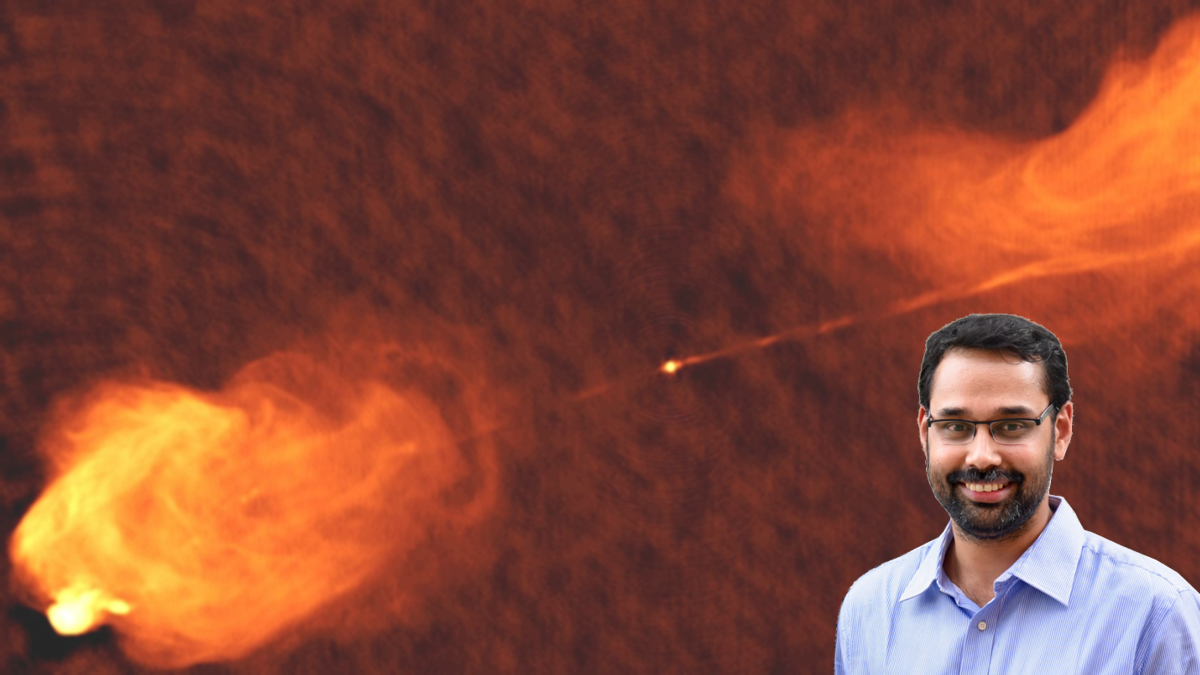
#Black holes through different windows
#Parameswaran Ajith, International Centre for Theoretical Sciences, Bengaluru
#Made entirely of curved spacetime, black holes are among the most enigmatic objects in the Universe. Although early theoretical ideas on objects like black holes go back to the eighteenth century, the first rigorous mathematical formulation of a black hole was made by Karl Schwarzschild in 1915, based on Einstein’s General Theory of Relativity. A variety of astronomical observations made in the last century confirmed that black holes are not just theoretical constructs — the Universe is littered with them. Aided by a host of new technologies, astronomical observations have now started probing the detailed nature of black holes. This talk will provide a summary of this exciting journey.
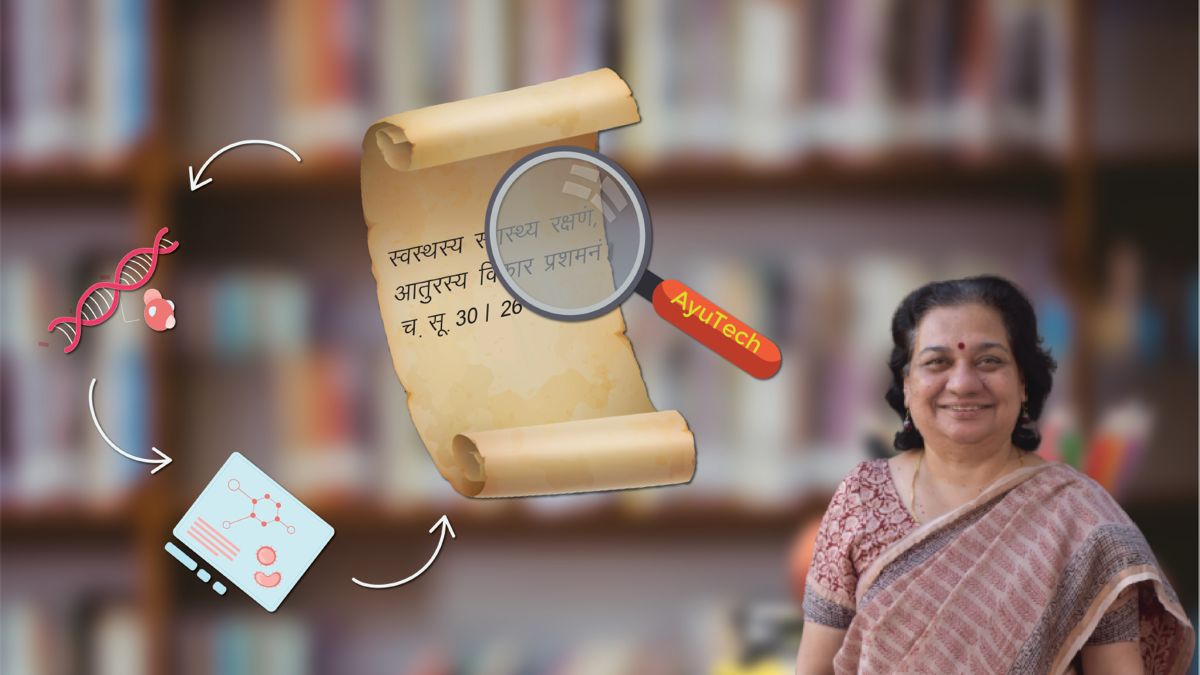
>Ayurveda and modern medicine: the beginning of a molecular conversation
#Mitali Mukerji, Indian Institute of Technology Jodhpur
#We are witnessing a paradigm shift from reactive to a more proactive, holistic and precision approach in health management. This approach is in Ayurveda practice for thousands of years and is practiced in one form or the other in many Indian households. However, the decision to avail Ayurveda as a/an additional medical option is primarily made by the patient with limited understanding and evidence. This is because there is a limited crosstalk between the practitioners of Ayurveda and modern medicine. A scenario where the practitioners from the two diverse streams sit across a table, seamlessly converse, exchange notes and cross-refer to co- evolve a health management regime is the need of the hour. My talk would highlight how the science of Ayurgenomics has made the beginnings of a molecular conversation between the streams. This has a potential for providing objectivity and evidence based solutions in integrative medicine settings.
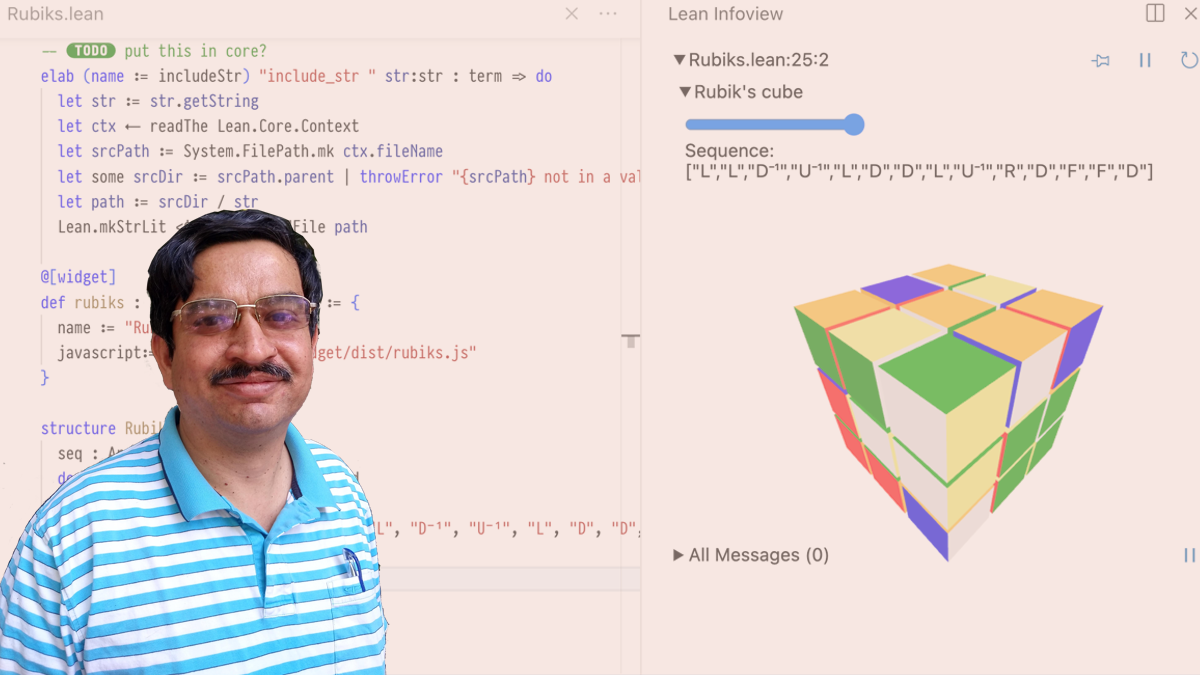
The Quest for Automating Mathematics
#Siddhartha Gadgil, Indian Institute of Science, Bangalore
#Starting with just the rules of chess, it took four hours of playing against itself for AlphaZero, a computer program, to become the strongest chess player on the planet, playing with a "dynamic, open style" and preferring moves that are "risky and aggressive". With a couple of days of self-play, AlphaZero discovered the best standard openings, and even discarded a few of them. Artificial intelligence systems can today write computer programs and create art poetry. Could a future computer program discover the mysteries of the primes?
Siddhartha Gadgil is a Professor of Mathematics at the Indian Institute of Science, Bangalore. He has a Ph.D. from California Institute of Technology and a B. Stat. degree from Indian Statistical Institute, Calcutta. Before joining I.I.Sc., he was a postdoc at Stony Brook University and on the faculty of Indian Statistical Institute, Bangalore.
Siddhartha began his research career in Topology and has worked for many years in this and related fields such as Geometric group theory and Riemannian geometry. He has also applied topology to study Molecular Biology. In recent years the main focus of his work has been Automated Theorem Proving, i.e., mathematics generated by computers.
Carnatic Music Processing: A Culture Specific Approach
#Hema A Murthy, Indian Institute of Technology Madras
#Indian art music is based on the "gayaki" style which means that even instruments try to reproduce the vocal style. The singing voice affords tremendous flexibility, and thus leads to significant ornamentation. Carnatic music is centred around the composition or "kriti" where the melody, lyrics and rhythm play an important role.
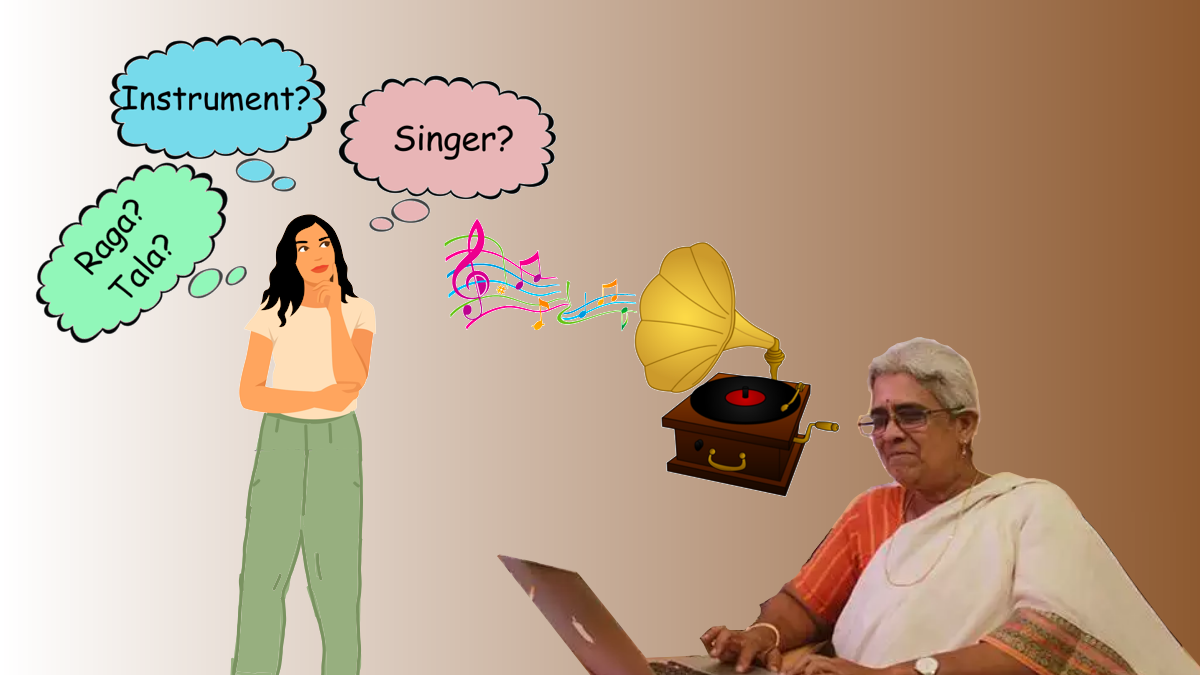
In this talk, I will present our efforts on "computational analysis" of Carnatic music. The computational analysis, ranging from "sruti" detection, melodic analysis, concert and kriti segmentation, to "typical phrase determination," leading to "raga recognition," will be presented. The talk will also cover a critical analysis of the relationship between “janaka” and “janya” ragas as also an attempt to augment the prescriptive notation with an “automatic descriptive notation,” that enables reproduction of the melody. The percussion accompaniment in Indian music is also replete with improvisation. I also discuss our efforts on an analysis of the mridangam strokes. Many of the aspects are also relevant for Hindustani Music. Wherever possible, we also draw examples from Hindustani Music.
Registration
#The registration for the event is now closed.