29 March 2026
4 - 8 PM
Music Academy, TTK Road
The program consists of four talks aimed at the general public.
No specialized knowledge of science is required to appreciate the talks. The program is free and open to all but registration (on this web page) is required.
| Time | Title | Speaker |
|---|---|---|
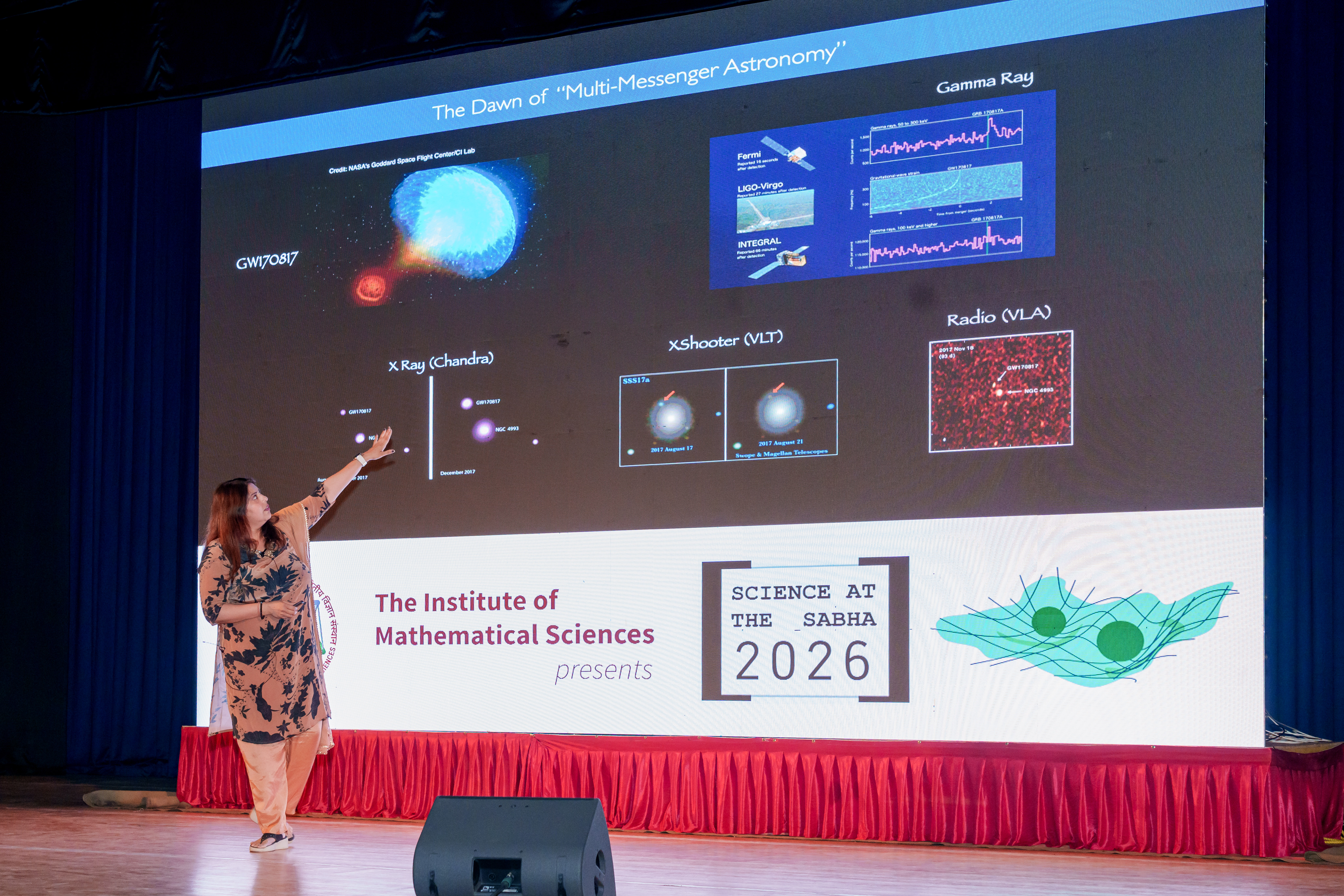
| 4:00 PM - 4:45 PM | Gravitational waves: Listening to the Cosmic Symphony | Debarati Chatterjee Inter-University Center for Astronomy and Astrophysics |
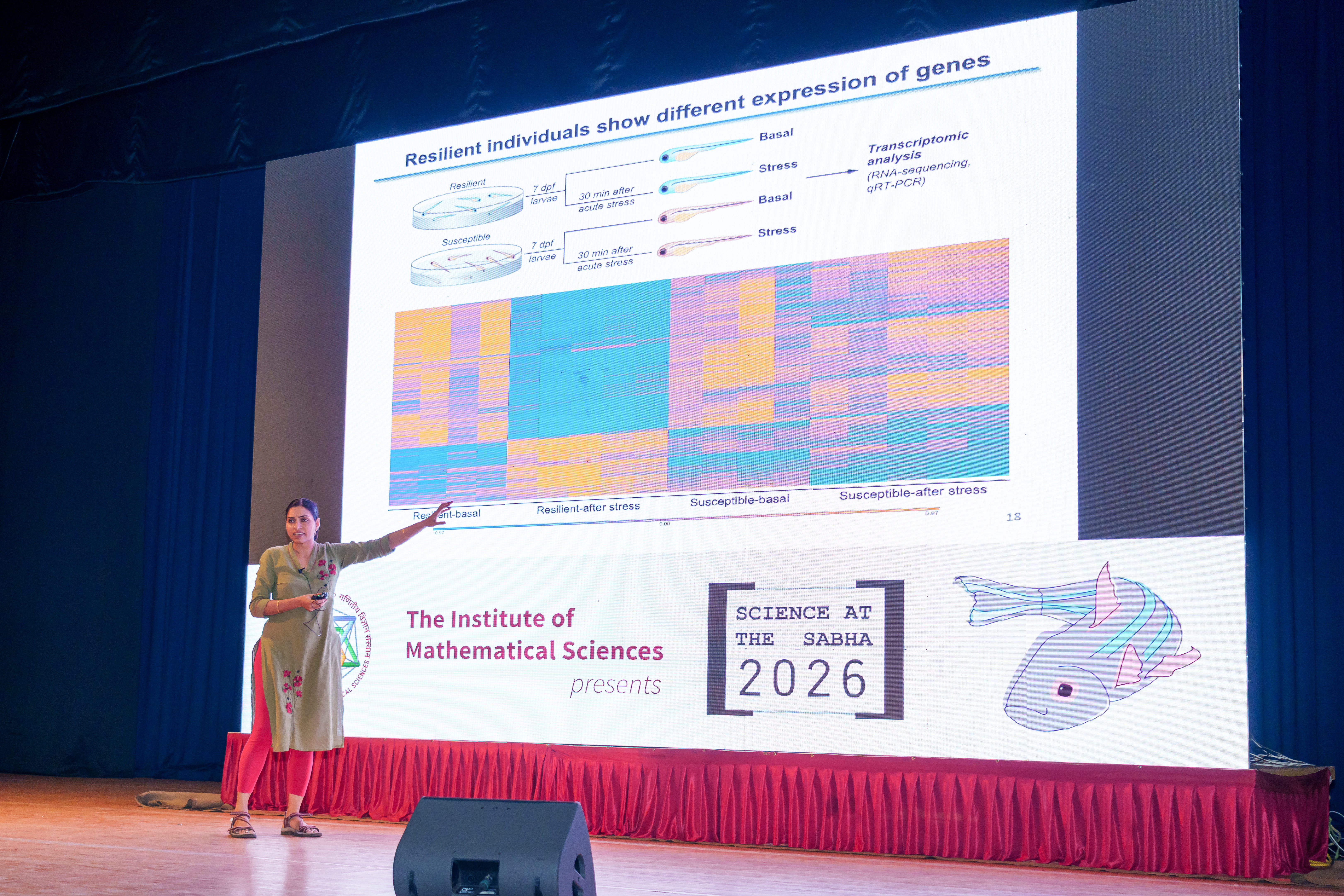
| 4:45 PM - 5:30 PM | From fish to feelings: How early life shapes who we become | Amrutha Swaminathan Indian Institute of Science Education and Research Thiruvanthapuram |
| Refreshment Break (5:30 PM - 6:00 PM) | ||
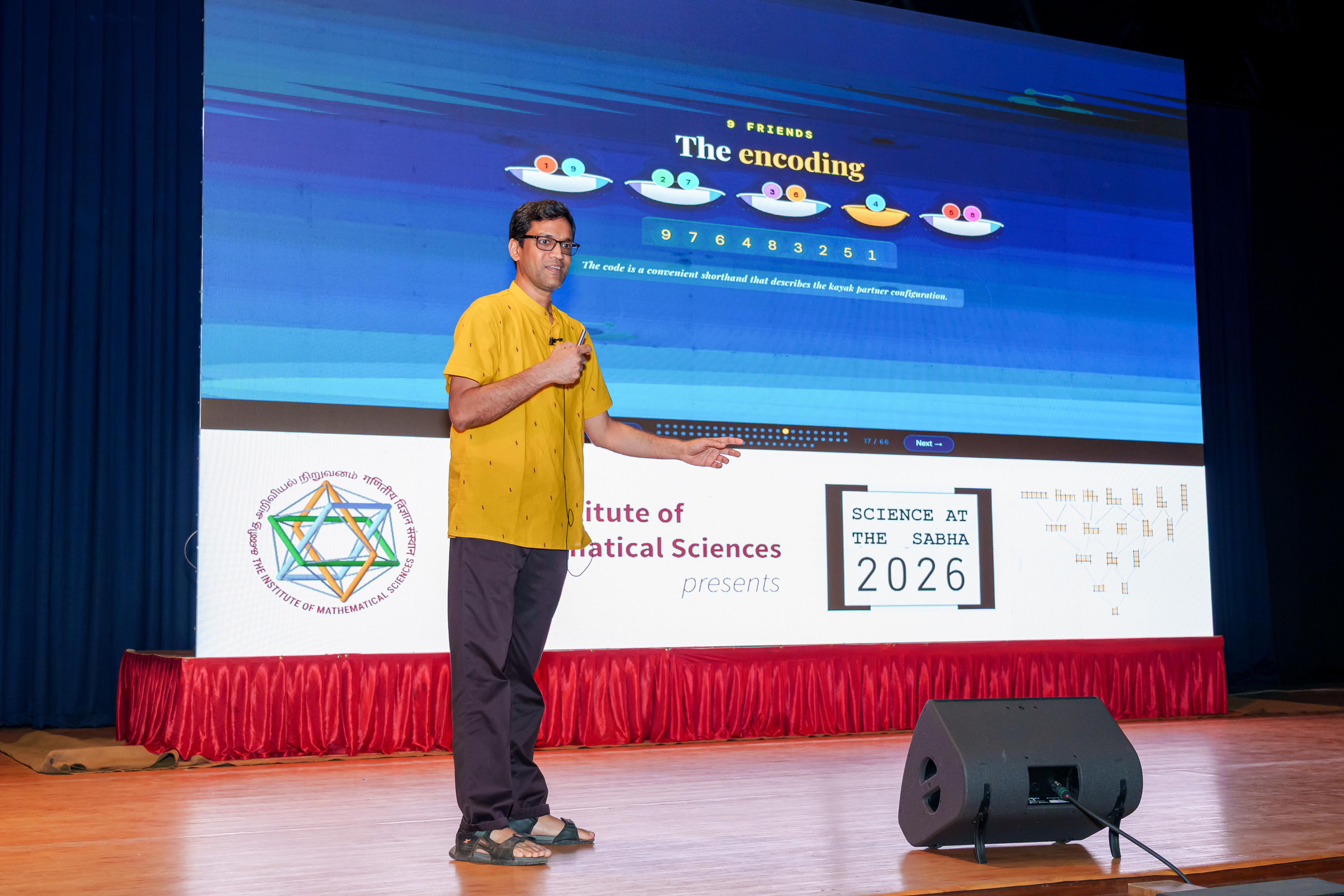
| 6:00 PM - 6:45 PM | The secret lives of everyday numbers | S. Viswanath The Institute of Mathematical Sciences |
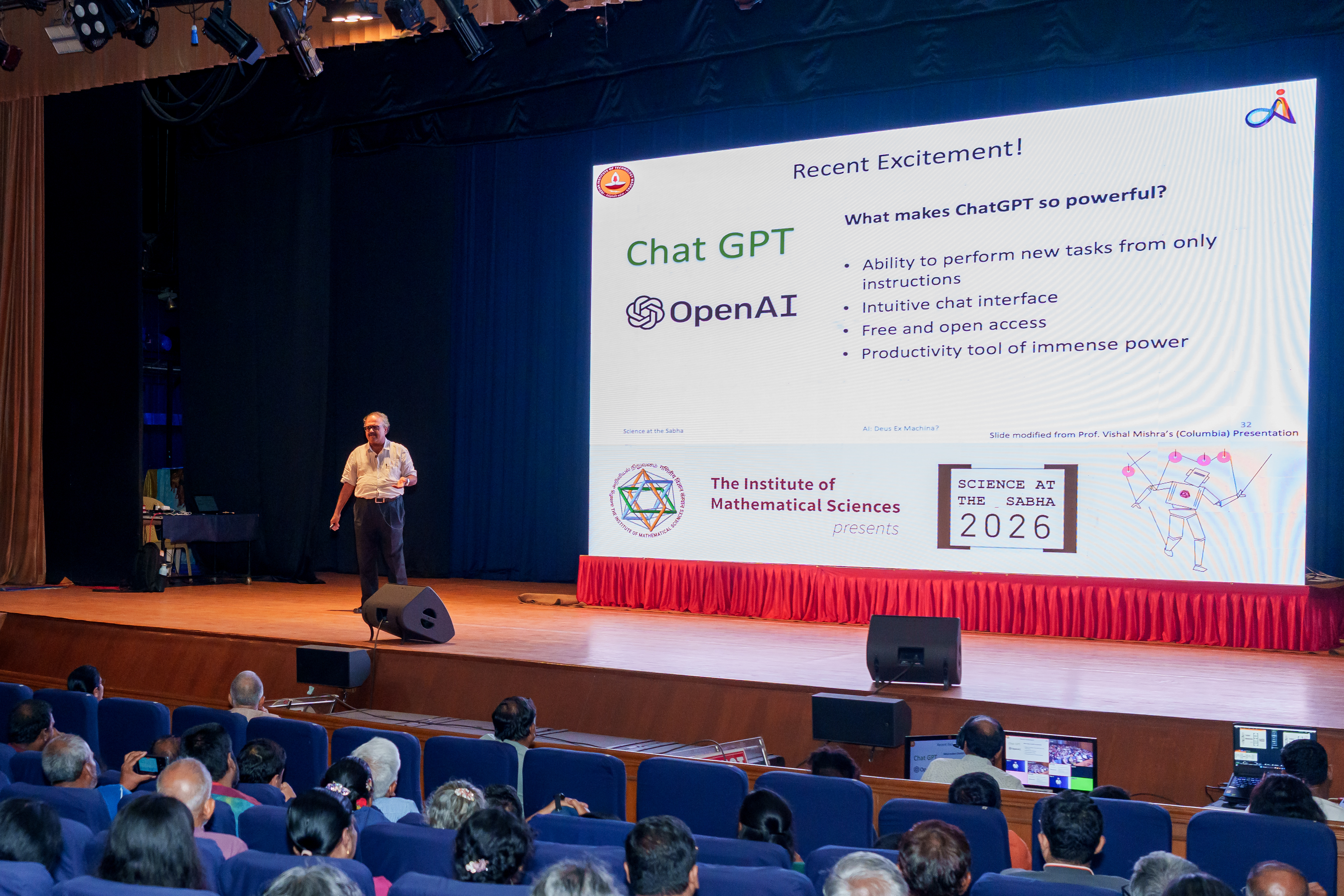
| 6:45 PM - 7:30 PM | AI - Deus ex Machina? | B. Ravindran Indian Institute of Technology Madras |
Speakers
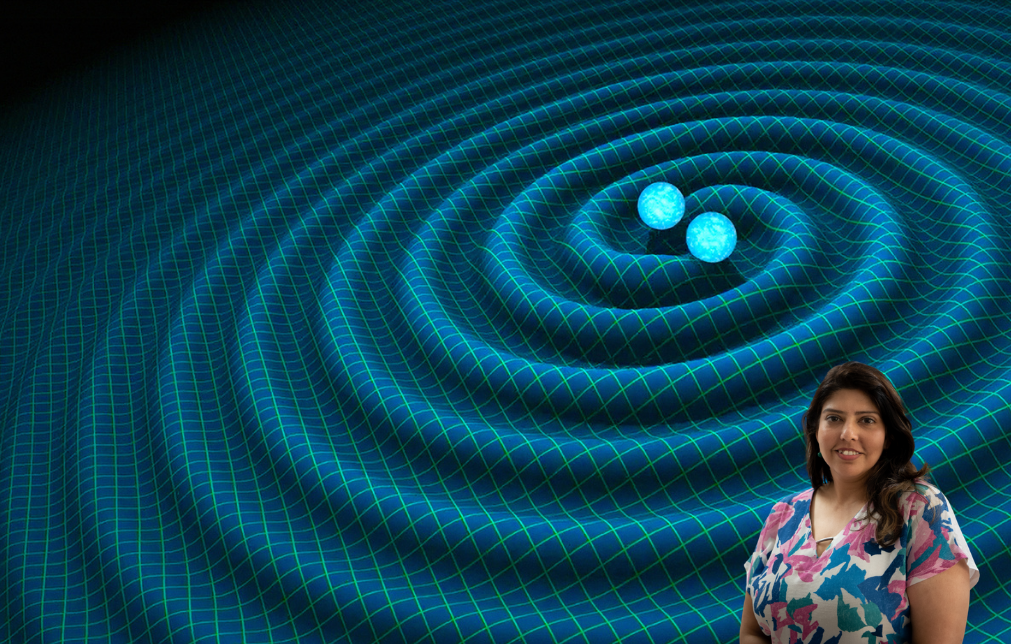
Debarati Chatterjee
Inter-University Center for Astronomy and Astrophysics (IUCAA), PuneGravitational waves: Listening to the Cosmic Symphony
The densest objects in the Universe, called Neutron stars, are cosmic laboratories that allow us to understand behaviour of matter from infinite to infinitesimal scales. Their extreme environment may harbour the presence of hypothetical strange subatomic particles that are conjectured by the standard model of particle physics. Astrophysical observations with telescopes across multiple frequencies have not been able to resolve the long-standing puzzle of its interior composition. The recent discovery of gravitational waves has unveiled a novel window, allowing us to listen to the invisible Universe. Can gravitational waves from neutron stars finally unlock the secrets to their mysterious interior?
Debarati Chatterjee is a Theoretical Astrophysicist, Professor at Inter-University Centre for Astronomy and Astrophysics (IUCAA) in Pune, and serves as Chair of Education and Public Outreach for the LIGO-India mega-science project. She is also a passionate Science communicator and Ambassador for Diversity, Equity and Inclusion. She finds work-life balance through diverse activities like learning languages and dances from across the globe, art and adventure sports.
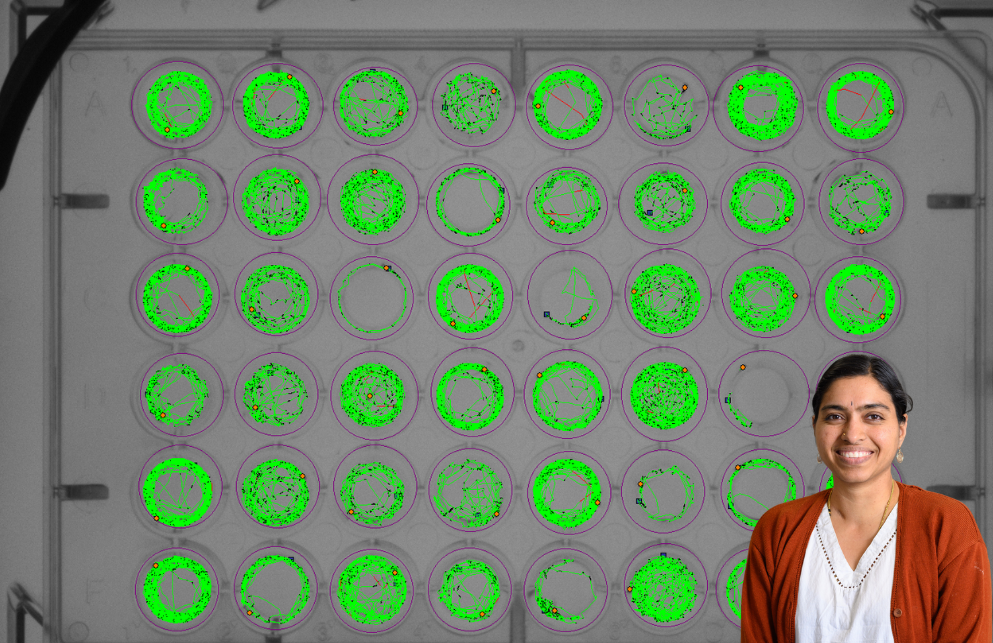
Amrutha Swaminathan
Indian Institute of Science Education and Research ThiruvanthapuramFrom fish to feelings: How early life shapes who we become
Developmental processes determine various aspects of adult life and health. Subtle differences during development like maternal stress and nutrition can contribute to behavioural tendencies later in life. By performing behavioural assays on tiny tropical fish at different stages of development, we established that some individuals are more resilient to stress than others from early on in life. Further, resilience is a stable and heritable trait, whereby resilient individuals stay thus as they grow and their offspring have a greater likelihood of being resilient. Finally, we discovered that the immune system plays an unlikely role in regulating resilience. Taking this forward, not only do immune factors regulate resilience, we find that they may also regulate sleep. Put together, I will discuss how the immune system has a role beyond fighting infections in setting up our behaviour in early life.
Amrutha Swaminathan received her PhD from JNCASR, Bangalore supported by a fellowship from the Council for Scientific and Industrial Research. During her PhD, she worked on understanding the role of chromatin factors in brain development. She worked as a Charpak fellow and as a Rhone-Alpes regional exchange fellow in ENS-Lyon. Following her PhD, Amrutha was an FRQS post-doctoral fellow in CRCHUM, Montreal, Canada, where she worked on understanding the mechanisms driving neurological diseases like epilepsy and amyotrophic lateral sclerosis. In her second post-doctoral stint at the Weizmann Institute of Science, Rehovot, Israel, she developed behavioural tools to study stress resilience.
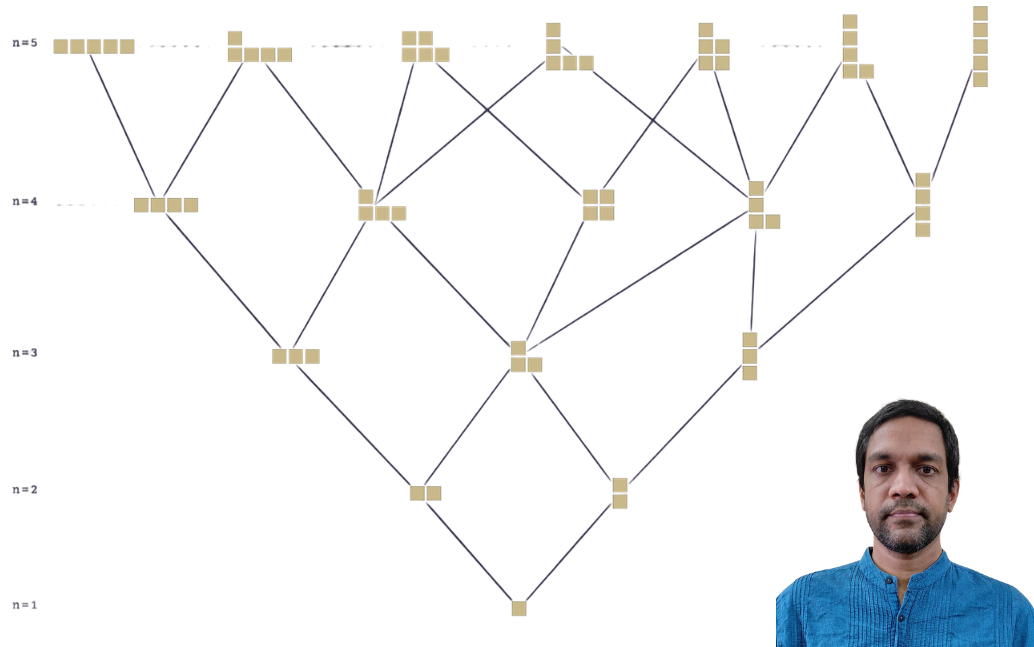
S. Viswanath
The Institute of Mathematical SciencesThe secret lives of everyday numbers
What does slicing a cake have to do with a drunkard's walk? Or what indeed does boating on the Adyar river have to do with Srinivasa Ramanujan? To make sense of these incongruous oddities, we will turn to the most fundamental of mathematical pursuits - counting! We will discover a miraculous algorithm that moulds lists of digits into geometrical shapes, and soon find ourselves wondering "is my phone number a flagpole, or is it a staircase?"
These seemingly idle musings will turn out to be related to a vibrant frontier area of modern mathematics. This action-packed story moves through the scenic backdrops of Cambridge and California, of Paris, Switzerland and the south Bombay seafront, before reaching its decisive climax in Madras a little over 35 years ago with the work of Lakshmibai and Seshadri.
S. Viswanath is a Professor of Mathematics at the Institute of Mathematical Sciences, Chennai. He grew up in Chennai, did his undergraduate studies at IIT Kanpur and obtained his PhD from the University of California at Berkeley. He is interested in algebra, combinatorics and in how we all learn mathematics.
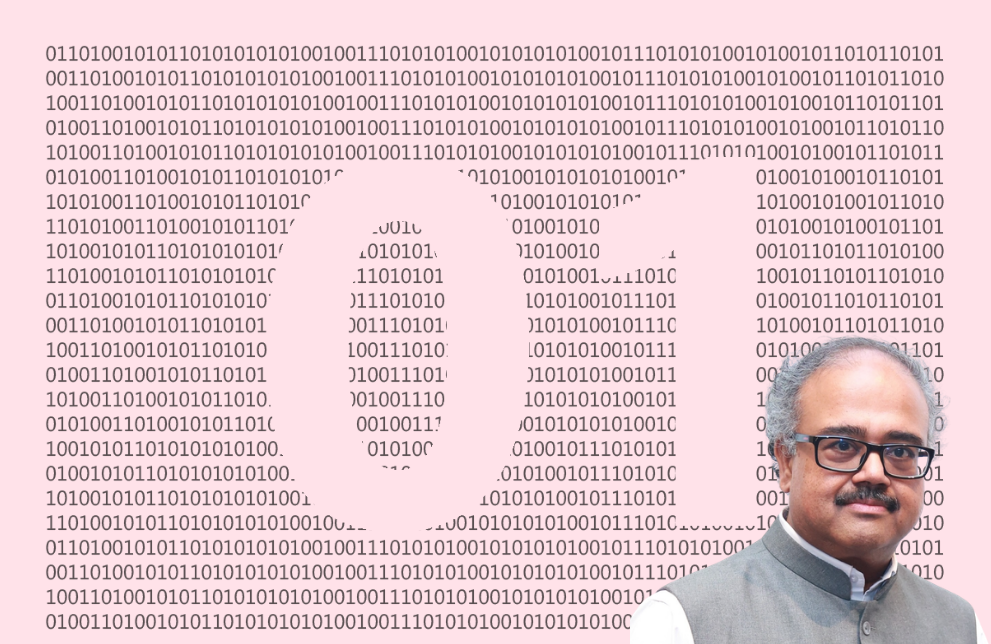
B. Ravindran
Indian Institute of Technology MadrasAI - Deus ex Machina?
Is AI reaching superhuman abilities? Could it replace humans? Don't panic. We are not there yet. In this talk, I will briefly discuss the underlying principles of AI and the current capabilities of AI models.
B. Ravindran is the founding head of the Wadhwani School of Data Science and AI and the Centre for Responsible AI (CeRAI) at IIT Madras. He has more than three decades of experience in AI research and teaching. He is a fellow of the Association for the Advancement of AI and of the Indian National Academy of Engineering. He serves on the UN Independent International Scientific Panel on AI.
Recorded Talks
Gravitational waves: Listening to the Cosmic Symphony
From fish to feelings: How early life shapes who we become
The secret lives of everyday numbers
AI - Deus ex Machina?
Photos
Instructions
Auditorium doors open at 3:30 pm. Please be seated by 3:45 pm. After that time, we will start letting in walk-in participants.
Parking (3:00 -- 8:00 pm) is available inside the The Music Academy Campus. Extra parking (3:00 -- 8:00 pm) is available at St. Ebbas Girls Higher Secondary School (across the road to the East).
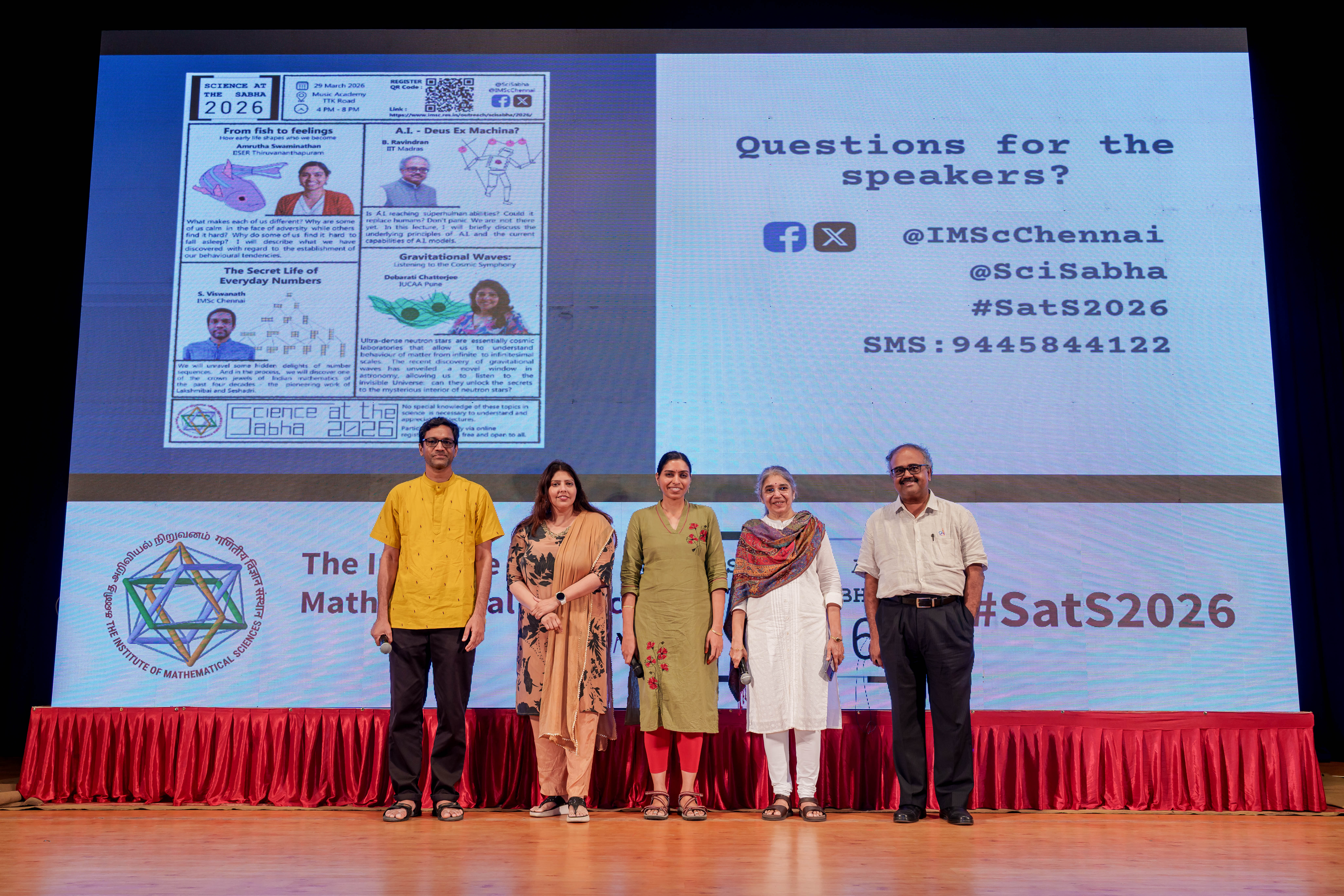
Have a question for any of the speakers?
Post them
On Facebook: www.facebook.com/scisabha
Or on X: @scisabha, #sats2026
Selected questions will be answered by the speakers on stage!
Printables
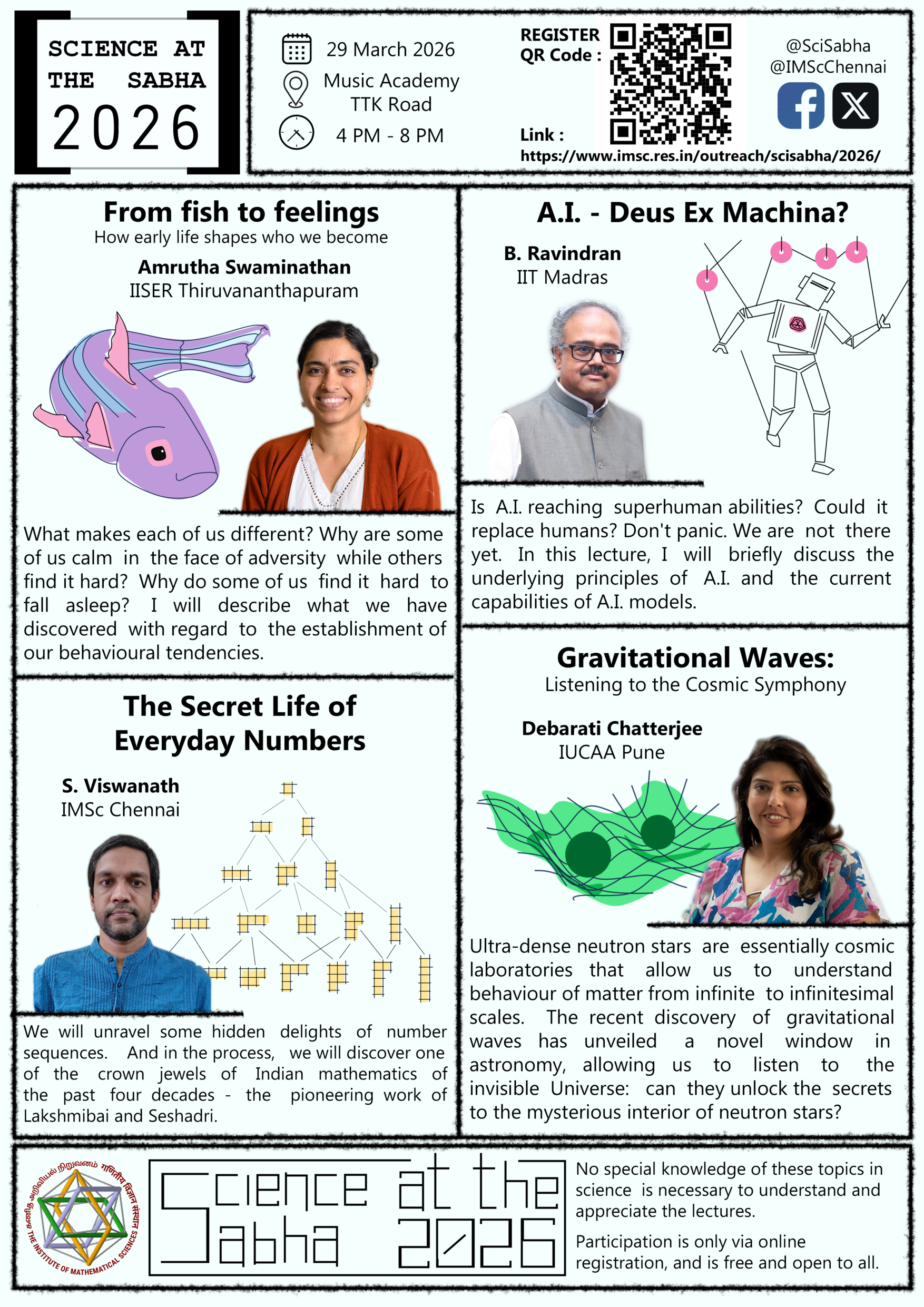
Download Hi-res Posters
You can print these for your institute notice boards
Poster ImagePoster PDF